
Digital Marketing for Real Estate Agents: Complete Guide to Growing Your Business Online (2026)
 by wpadmin on July 3, 2026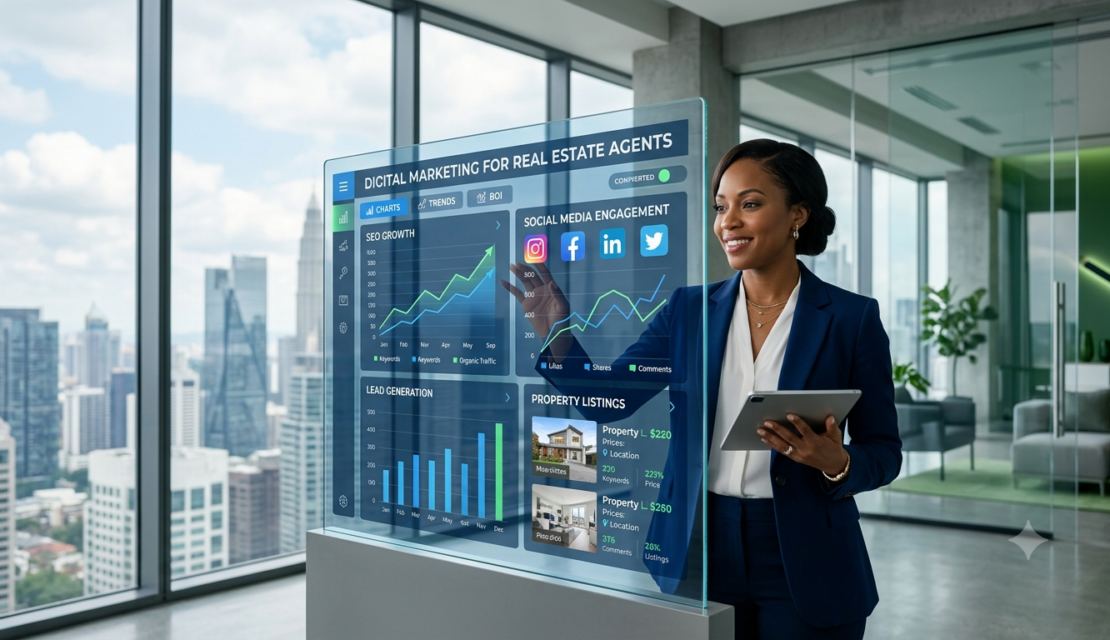
Today’s home buyers and sellers begin their real estate journey online. Before contacting an agent, they search Google, compare local realtors, read reviews, visit websites, and explore social media profiles.
If your business is not visible where your potential clients are searching, you are most likely losing leads to competitors who already have a strong online presence.
This is why digital marketing for real estate agents has become essential in 2026. It is not limited to posting on social media or running ads. Instead, it is a complete system that includes SEO, website optimization, content marketing, Google Business Profile, email marketing, paid advertising, and video marketing.
In this guide, you will learn how to build a powerful digital marketing system that helps you attract qualified buyers and sellers, build trust, and generate consistent leads.
What Is Digital Marketing for Real Estate Agents?
Digital marketing for real estate agents is the process of using online platforms and strategies to promote properties, build a personal brand, and generate qualified leads from buyers and sellers.
Instead of relying only on referrals or offline marketing, digital marketing allows agents to reach people actively searching for real estate services online.
A complete digital marketing system includes:
- Search Engine Optimization (SEO)
- Local SEO strategies
- Google Business Profile optimization
- Content marketing (blogs, articles, guides)
- Social media marketing
- Email marketing campaigns
- Paid advertising (Google Ads, Meta Ads)
- Video marketing (YouTube, reels, shorts)
The goal is not just visibility. The real goal is to create a system that continuously attracts, nurtures, and converts leads into clients.
Why Digital Marketing Matters for Real Estate Agents in 2026
1. Buyers Start Their Journey Online
Modern buyers no longer depend on agents first. They research:
- Property prices
- Locations
- Market trends
- Agent reviews
If you are not visible online, you are missing early-stage buyers.
2. Builds Trust Before First Contact
People prefer working with agents they already know or trust. Digital marketing helps you build that trust through:
- Content
- Reviews
- Videos
- Social media presence
When clients contact you, they already feel familiar with your brand.
3. Generates Continuous Leads
Traditional marketing stops when you stop paying. But digital marketing systems like SEO and content marketing keep working 24/7.
A well-optimized website or YouTube channel can generate leads even when you are not actively working.
4. Levels the Competition
Even small or independent real estate agents can compete with large agencies if their digital presence is strong. Online visibility depends more on strategy than budget.
Build a High-Converting Real Estate Website
Your website is the foundation of your digital marketing strategy. Without it, all other efforts lose effectiveness.
A real estate website should not only display listings but also convert visitors into leads.
Key Features of a Good Website
1. Mobile-Friendly Design
Most users browse on mobile devices, so your website must load properly on all screen sizes.
2. Fast Loading Speed
Slow websites lose potential clients quickly. Optimize images and hosting for better performance.
3. Clear Navigation
Users should easily find listings, contact pages, and property details.
4. Lead Capture Forms
Include forms for:
- Property inquiries
- Booking consultations
- Free property valuation
5. Strong Call-to-Actions (CTAs)
Examples:
- “Schedule a Viewing”
- “Get Free Property Valuation”
- “Contact Our Agent Today”
Local SEO for Real Estate Agents
Local SEO is one of the most powerful strategies for real estate agents because real estate is location-based.
It helps your business appear in searches like:
- “real estate agent near me”
- “homes for sale in Faisalabad”
Why Local SEO Works
People always search for agents in their local area. This means ranking in local searches directly brings high-quality leads.
Key Local SEO Strategies
- Use location-based keywords
- Create city and neighborhood pages
- Get Google reviews from clients
- Build local backlinks
- Maintain NAP consistency (Name, Address, Phone)
Optimize Your Google Business Profile
Your Google Business Profile (GBP) is one of the most important free tools for real estate marketing.
When properly optimized, it can bring direct leads from Google Search and Maps.
What to Include
- Correct business information
- Professional images
- Service areas
- Regular updates
- Client reviews
A strong GBP builds trust and improves local visibility.
Content Marketing for Real Estate Agents
Content marketing helps you attract and educate potential clients through valuable information instead of direct promotion.
Instead of only posting listings, you answer questions buyers and sellers are already searching for.
Content Ideas
- Home buying guides
- Selling tips
- Market updates
- Neighborhood insights
- Investment advice
- Mortgage explanations
Why Content Marketing Works
When you consistently provide helpful information, people start seeing you as a trusted expert. This increases inquiries and conversions over time.
Social Media Marketing for Real Estate Agents
Social media is an essential part of real estate digital marketing that helps agents build their personal brand, connect with their target audience, and generate consistent leads.
Platforms such as Facebook, Instagram, YouTube, and TikTok allow real estate professionals to showcase property listings, share market updates, and engage directly with potential buyers and sellers in a more interactive way.
In today’s digital landscape, social media is no longer just about posting content—it has become a complete lead generation system where trust is built over time and conversations naturally turn into clients.
If you want a deeper understanding of how social media works specifically in real estate marketing, you can explore this detailed guide on Real Estate Social Media Marketing for Agents (2026).
Email Marketing for Real Estate Leads
Email marketing helps you nurture leads over time instead of losing them after first contact.
What to Send
- New property listings
- Market updates
- Buying/selling tips
- Monthly newsletters
- Investment opportunities
Email keeps your brand in front of potential clients until they are ready to make a decision.
Google Ads and Paid Advertising
Paid advertising helps generate instant visibility and fast leads.
Types of Ads
- Buyer lead campaigns
- Seller lead campaigns
- Property listing ads
- Local search ads
SEO builds long-term growth, while paid ads deliver immediate results.
Video Marketing for Real Estate Agents
Video marketing is one of the most powerful tools in real estate today.
Types of Videos
- Property walkthroughs
- Neighborhood tours
- Market updates
- Client testimonials
- Educational content
Video builds trust much faster than text or images because it shows real properties and real people.
Common Digital Marketing Mistakes
Many real estate agents fail because of avoidable mistakes:
- No consistent strategy
- Ignoring SEO
- Poor website design
- Not tracking leads
- Relying only on social media
- Weak branding
Avoiding these mistakes can significantly improve your results.
Frequently Asked Questions
What is digital marketing in real estate?
It is the use of online platforms to attract and convert buyers and sellers.
Which strategy works best?
A combination of SEO, content marketing, social media, and paid ads works best.
Do real estate agents need a website?
Yes, a website is the foundation of digital marketing.
How long does SEO take?
Usually 3–6 months depending on competition.
Conclusion
Digital marketing is no longer optional for real estate agents. It is the foundation of modern lead generation and long-term business growth.
By combining SEO, content marketing, local SEO, Google Business Profile optimization, email marketing, paid advertising, and video marketing, you can build a system that consistently attracts qualified leads.
Success in real estate digital marketing does not come from shortcuts—it comes from consistency, strategy, and trust-building.
The more value you provide online, the more leads and clients you will generate.